loom
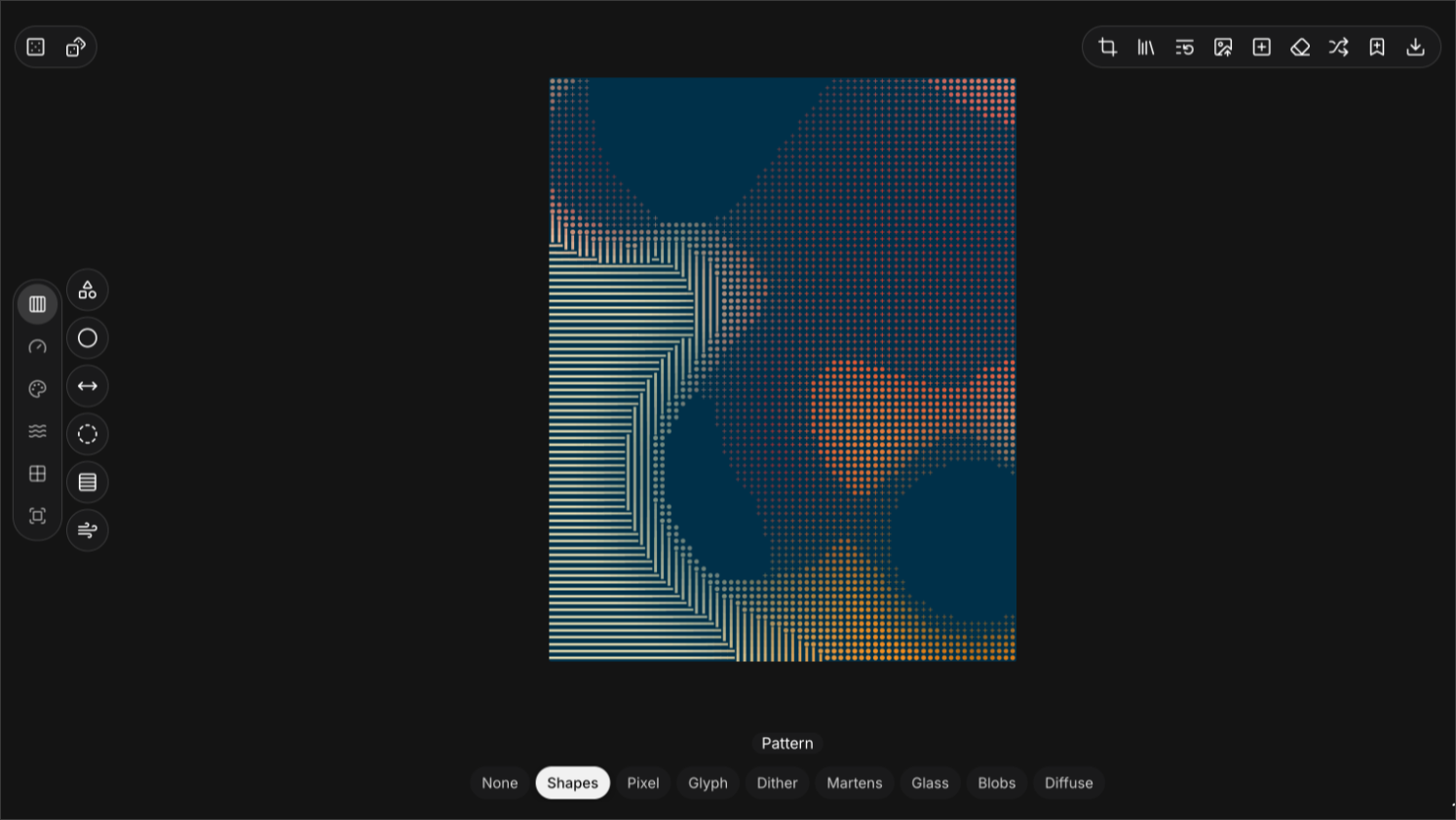
Turns a photo or video into a flat graphic pattern.
Open loom.robertfarrelly.com ↗Turns a photo or video into a flat graphic pattern — weave stripes or halftone shapes, built from the image’s own colours — entirely in the browser.
Stack
- Vite + TypeScript for the build. No UI framework: the control surface is
a hand-rolled, imperative DOM/canvas renderer (its own
vstate object drives everything), so wrapping it in React/Vue would mean rewriting a finely-tuned pixel engine for no real benefit. Vite just gives it proper modules, a dev server, and a production bundle. - Dexie (IndexedDB) for persistence — presets, uploaded source files, and past exports all survive a reload. localStorage can’t hold file blobs and caps out around 5MB, so this is a real “memory” layer rather than browser storage pretending to be one.
Structure
index.html            Vite entry — static page shell (canvas, dock, sheets)
src/
  main.ts             Boots the app
  engine/
    loom.js            The renderer/controls/gestures/export engine (ported
                        near-verbatim from the original single-file artifact)
  storage/
    db.ts              Dexie schema: presets, files, downloads
    presets.ts         Save/list/load/delete named setting snapshots
    files.ts           Store/list/reopen uploaded source images & videos
    downloads.ts       Trigger a real download + keep a re-downloadable copy
  styles/
    app.css            All styling (including the new Library sheet)
reference/
  Loom.cleanup-reference.html   Superseded single-file version, kept for history
Library (new)
A “Library” button sits in the top-right control bar, next to Download. It opens a sheet with three tabs:
- Presets — save the current look under a name, reload it later, or delete it.
- Files — every image/video you’ve opened is kept (most recent ~16); tap one to reopen it without a file picker.
- Downloads — every PNG/SVG/PDF/video export is kept (most recent ~24); tap one to re-trigger the download.
All of it lives in IndexedDB, under the origin this page is served from — it persists across reloads but is local to this browser/device.
Develop
npm install
npm run dev       # dev server with HMR
npm run build     # type-check + production build to dist/
npm run preview   # serve the production build locally